Community Story
Africa Must Build the Market Now
By Leo Kimutai · Aug 26, 2026
Where Can I Sell My Bamboo? Africa Must Build the Market Now
For years, farmers across Africa have been told that bamboo is the next big opportunity. It is often described as “green gold”—a fast-growing, sustainable resource with applications in construction, furniture, packaging, agriculture, energy and more.
But there is a question farmers are increasingly asking:
“Where can I sell my bamboo?”
It is a simple question, but it should be a wake-up call for everyone involved in Africa's bamboo industry.
Many farmers who have planted bamboo struggle to find reliable buyers. Where buyers exist, farmers may encounter very low prices or buyers who cannot absorb production at scale. This creates a serious concern: Are we building a bamboo industry, or are we simply encouraging people to plant bamboo without building the market to support them?
The problem is bigger than selling bamboo poles
A sustainable bamboo industry cannot depend entirely on selling raw poles.
The real opportunity lies in value addition.
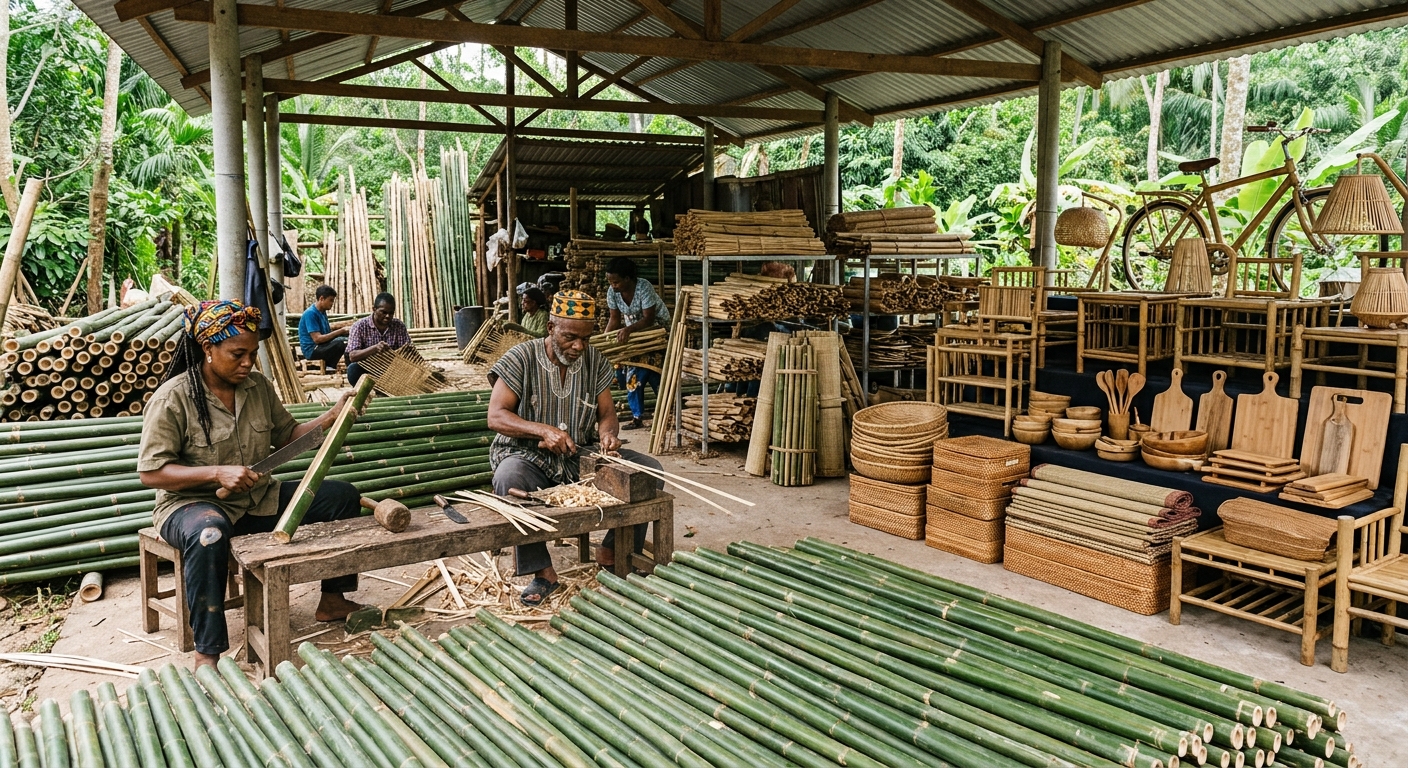
Countries such as China and Indonesia, including bamboo-focused communities in Bali, have demonstrated what is possible when bamboo moves beyond the farm. Bamboo is transformed into furniture, flooring, construction materials, packaging, household products and innovative architectural solutions.
Africa has the opportunity to do the same.
Instead of asking only, “Who will buy our bamboo?”, we should be asking:
“What products can we make from bamboo that people already need?”
Africa needs affordable housing materials. We need alternatives to plastic. We need furniture, packaging, agricultural structures and locally manufactured products. Bamboo could contribute to many of these markets—but only if investment in processing, manufacturing, research, design and distribution happens alongside production.
The industry must act before the bamboo matures
We cannot wait until farmers have mature plantations before we start looking for markets.
Nurseries, farmers, processors, manufacturers, researchers, investors, governments and development organisations need to work together to build the bamboo value chain now.
Farmers deserve realistic information about markets and profitability—not simply promises that bamboo is “green gold.”
The real green gold is not the seedling or even the raw pole.
It is the value we create from it.
If Africa gets this right, bamboo can become more than a promising crop. It can become a source of jobs, manufacturing, sustainable products and new opportunities for farmers and young entrepreneurs.
The question “Where can I sell my bamboo?” should not be ignored.
It should become the question that drives us to build the industry.
Africa has the bamboo. Now we must build the market.